In the construction industry, electricity is one of the largest operational expenses for a concrete production facility. Whether operating a stationary concrte plant, a mobile mixing system, or a commercial ready-mix facility, electricity powers conveyors, mixers, compressors, batching systems, and control equipment. As energy prices across Latin America continue to fluctuate, many investors are asking an important question: are “energy-efficient” batching plants really worth the higher purchase price?
This question is particularly relevant for contractors evaluating a concrete plant for sale(venta de planta de hormigon) in markets such as Chile, Colombia, and Peru. While modern plants equipped with high-efficiency motors, frequency converters, and optimized mixing systems often cost more initially, they promise lower electricity consumption over time. Understanding the relationship between energy savings and regional electricity tariffs can help investors determine whether the extra investment is economically justified.
This article explores the electricity consumption model of concrete batching plants and estimates how long it may take for contractors in Latin America to recover the additional investment in energy-efficient systems.
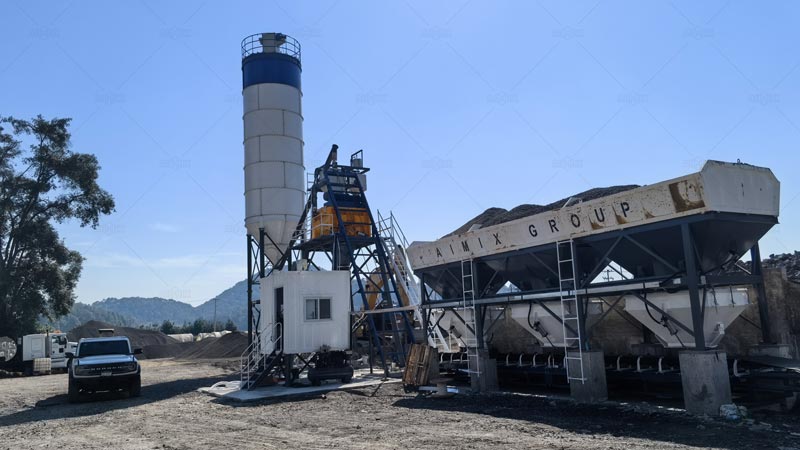
How Much Electricity Does a Concrete Batching Plant Use?
Typical Energy Consumption per Cubic Meter
The electricity consumption of a batching plant depends on capacity, automation level, and plant configuration. Industry estimates show that most plants consume between 10 and 50 kWh of electricity per cubic meter of concrete. Small plants typically operate at around 10–20 kWh/m³, while large fully automated facilities may consume 30–50 kWh/m³. :contentReference[oaicite:0]{index=0}
For example, a medium-capacity plant producing around 120 m³ per hour may have a total installed power of about 185 kW when running at full capacity. :contentReference[oaicite:1]{index=1}
In practical terms, the electricity consumption of a typical mid-scale concrte plant(planta concreto) can be summarized as follows:
- Small project plant: 10–20 kWh per m³
- Medium commercial plant: 20–30 kWh per m³
- Large industrial plant: 30–50 kWh per m³
Because many ready-mix operations produce hundreds of cubic meters daily, even small efficiency improvements can translate into significant long-term savings.
What Makes a Concrete Plant “Energy Efficient”?
High Efficiency Motors
Modern batching plants often use IE3 or IE4 high-efficiency motors. These motors reduce internal electrical losses and can save roughly 2–7% of energy compared with conventional motors. :contentReference[oaicite:2]{index=2}
These motors are commonly installed on:
- Aggregate conveyor belts
- Cement screw conveyors
- Main mixer drives
- Air compressor systems
Although these components increase equipment cost slightly, they improve long-term operational efficiency.
Variable Frequency Drives
Another major efficiency feature is the use of variable frequency drives (VFDs). These electronic systems regulate motor speed according to load demand. Instead of running motors continuously at full speed, VFDs adjust power usage dynamically.
In batching operations where material flow is intermittent, VFD technology can reduce energy consumption by up to 20%. :contentReference[oaicite:3]{index=3}
Optimized Mixing Systems
Energy-efficient plants also integrate improved mixing technologies. Twin-shaft mixers with optimized blade geometry shorten mixing cycles, reducing the time the mixer motor must operate.
Shorter mixing cycles mean less energy consumed per cubic meter of concrete.
Electricity Prices in Latin America
The financial value of energy efficiency depends largely on regional electricity tariffs. Across Latin America, electricity costs vary significantly from country to country.
Chile
Businesses in Chile pay roughly USD 0.20 per kWh for electricity, which is higher than the regional average. :contentReference[oaicite:4]{index=4}
This relatively high cost means that energy savings from efficient equipment can quickly translate into real financial benefits.
Colombia
Industrial electricity in Colombia is also expensive. Studies indicate that companies may pay around USD 0.20 per kWh, making it one of the highest electricity prices in Latin America. :contentReference[oaicite:5]{index=5}
This cost pressure is particularly relevant for companies operating large batching facilities such as a concrete plant Colombia serving urban infrastructure projects.
Peru
Electricity costs in Peru are slightly lower but still significant for industrial operations, typically around USD 0.17 per kWh. :contentReference[oaicite:6]{index=6}
These energy prices influence the economics of projects such as operating a mobile concrete plant Peru(planta de concreto movil Perú) in remote infrastructure or mining projects.
Electricity Cost Model for Concrete Production
To estimate the financial value of energy-efficient equipment, we can create a simplified electricity cost model.
Example Production Scenario
Assume a medium commercial plant produces:
- 150 m³ of concrete per day
- 26 working days per month
- 3,900 m³ per month
If the plant consumes an average of 25 kWh per cubic meter, total electricity consumption would be:
3,900 m³ × 25 kWh = 97,500 kWh per month
Monthly Electricity Cost
Using an average Latin American industrial electricity price of USD 0.18 per kWh:
97,500 kWh × $0.18 = $17,550 per month
This means electricity alone could represent a substantial portion of operating expenses.
Energy Savings with Efficient Concrete Plants
Suppose an energy-efficient plant reduces electricity consumption by 15% through improved motors, optimized conveyors, and VFD control.
Energy Consumption Reduction
Original consumption: 97,500 kWh/month
15% reduction: 14,625 kWh saved per month
Monthly Electricity Savings
14,625 kWh × $0.18 = $2,632 per month
Annual electricity savings would therefore be approximately:
$31,584 per year
Payback Period for Energy Efficient Plants
Energy-efficient batching plants usually cost slightly more due to premium motors, electronic drives, and optimized automation systems.
Typical Additional Investment
Compared with a standard plant, an energy-efficient version may cost:
- $20,000 – $40,000 more depending on configuration
Estimated Payback Time
Using the earlier energy savings estimate:
- Extra investment: $30,000
- Annual electricity savings: $31,584
The payback period would be:
Approximately 11–14 months
After this period, the energy savings effectively become additional profit.
When Energy Efficient Plants Make the Most Sense
High Production Ready Mix Operations
Large ready-mix facilities running continuously benefit most from energy-efficient equipment. Because production volume is high, electricity savings accumulate quickly.
Countries with High Electricity Costs
Regions with expensive power—such as Chile and Colombia—see faster returns on energy-efficient equipment.
In these markets, even moderate efficiency improvements can significantly reduce operating expenses.
Long-Term Infrastructure Projects
Contractors working on multi-year infrastructure projects also benefit from efficiency upgrades. For example, projects requiring a mobile concrete plant Peru in remote mining regions may operate continuously for several years, maximizing energy savings.
Evaluating Energy Efficiency When Buying a Concrete Plant
When reviewing a concrete plant for sale, investors should not focus only on the purchase price. Long-term operational costs often determine the true return on investment.
Important factors to evaluate include:
- Motor efficiency class
- Availability of frequency converters
- Automation and batching precision
- Mixer efficiency and cycle time
- Maintenance and service requirements
These technical factors influence not only electricity consumption but also reliability and maintenance costs.
Conclusion
Energy-efficient batching plants are usually slightly more expensive than conventional equipment. However, when electricity consumption models and Latin American energy prices are taken into account, the additional investment can often be recovered quickly.
For many operations—including a commercial concrete plant Colombia(planta de concreto Colombia), a mining-project mobile concrete plant Peru, or a regional ready-mix facility—the payback period may be close to one year under typical electricity tariffs.
Ultimately, evaluating energy efficiency should be part of a broader lifecycle cost analysis. While the initial price of a concrte plant may seem higher, the combination of lower energy consumption, improved operational stability, and reduced long-term expenses often makes energy-efficient plants the smarter investment for modern concrete production.